If you ask Dr. Amanda Hafer, ag teacher and FFA advisor at Lutheran High Northeast in Norfolk, Nebraska, she likely never would have imagined her path would have led her to where she is today. Not all great success stories are a product of an exact plan, and sometimes faith and passion play a greater role.
Dr. Hafer began her professional career as a veterinarian. Frustrated by the commitment that took away from family time, she took a shot at education. She taught the vet tech program at Northeast Community College for 10 years and found a love and passion for education.
When presented with the opportunity to teach high school agriculture at LHNE, she wasn't sure about it. Eventually, Dr. Hafer decided to combine her passion for faith and education and began the process of obtaining her teaching certificate. Even though her journey to agriculture education has been long, Dr. Hafer believes that if you find something you love, you should just do it.
The Lutheran High Northeast agriculture program and FFA chapter has seen a lot of positive change and growth in just six short years. The FFA chapter began with 20 charter members in 2020, and this year has increased to 45 members.
A capital campaign helped raise more than $3.5 million to build an ag classroom and shop. The project also included a new science facility that was designed to meet the needs of the school’s growing enrollment. According to Hafer, this expansion also increased students’ interest in agriculture. However, the space was not very conducive to raising plants, so the need for a specialized area for plants was realized.
“Once the new facility was up and running, and I was teaching the curriculum, it was apparent that the only ag classes that were not benefitting from the new facility were plant science, agronomy, and horticulture classes,” says Hafer. “Our booster club saw the need for a specialized space for plants and raised $20,000 to help purchase a greenhouse to enhance the plant science portion of our curriculum.”
Then, over the course of the past year, Lutheran High applied for and received grants from the Nebraska FFA Foundation, Central Valley Ag, and Farm Credit Services of America. These grant funds along with the booster club’s donation totaled $45,000 toward the greenhouse project.
Roughly a year later, surrounded by members of the Lutheran High FFA Chapter, school staff, and business representatives who donated labor, materials, and funding, the 25- x 16- foot greenhouse was dedicated in a ceremony earlier this month.
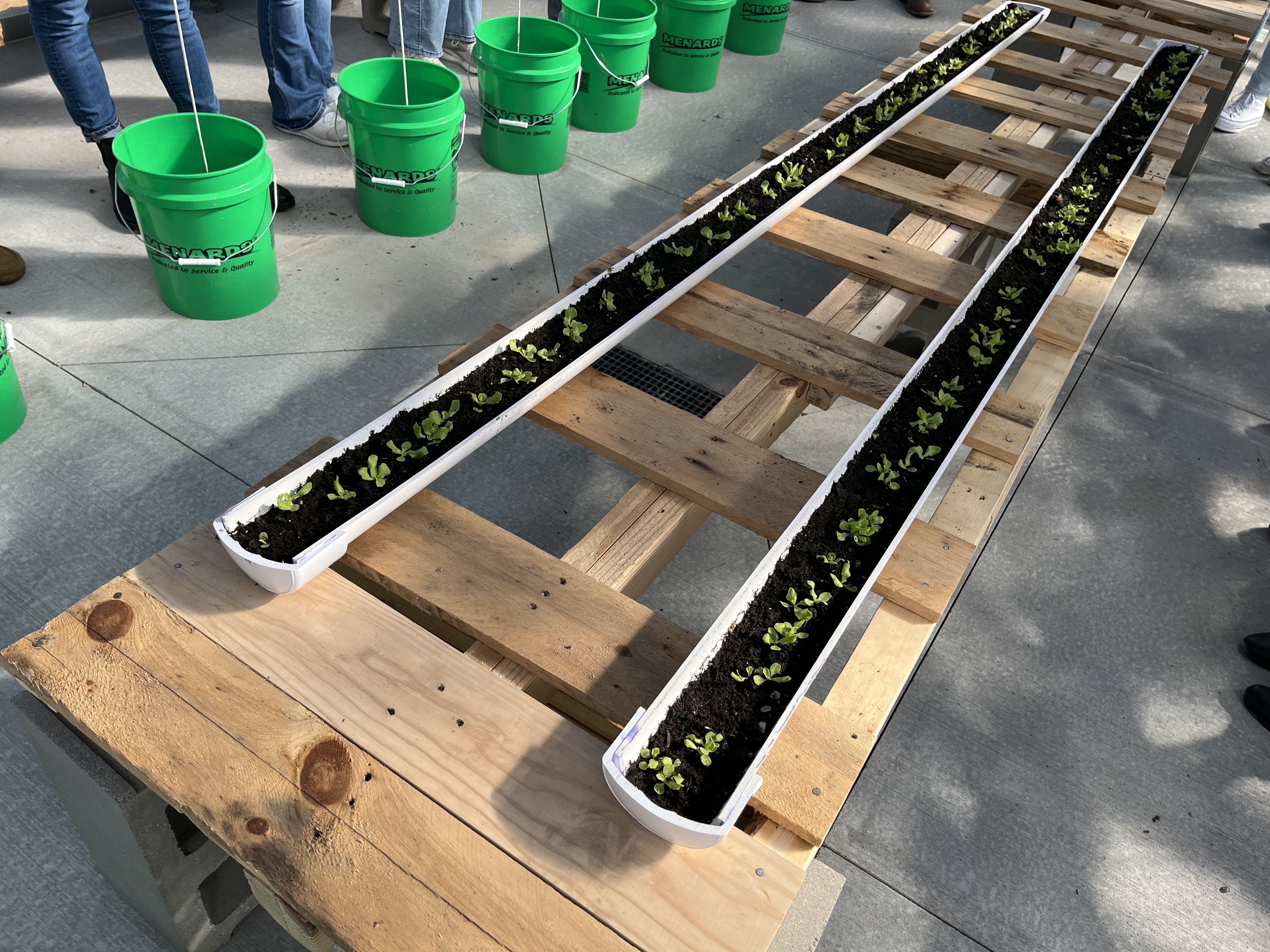
Dr. Hafer’s hope is for the students to utilize the greenhouse primarily as a learning tool for growing plants throughout the school year and to encourage SAE (supervised agricultural experience) projects. Students are also excited about the opportunity to eventually incorporate a “greenhouse-to-table” option within the school, growing microgreens and other vegetables, such as cucumbers, tomatoes, lettuce, and peppers.
“Our school doesn't currently have a lunch program, so students must bring their lunches from home,” Hafer explains. “This would be a healthy option for students to incorporate into their lunches.”
Finally, Hafer said the greenhouse will likely be used to raise annuals in the spring horticulture class to create planters to sell as a local fundraiser.
The Nebraska FFA Foundation is proud to have worked with Dr. Hafer and the Lutheran High FFA Chapter with grant funding throughout their journey thus far, not only for the greenhouse project, but also on a 2023 classroom grant to raise and process broiler chickens. Read about that project in the article “From Coop to Classroom.”
“The Nebraska FFA Foundation and its corporate sponsors have played an integral role in many of our FFA projects," Hafer says. “We are so blessed by the Foundation that continually supports our FFA chapter and agriculture classes.”
Throughout her time as an advisor, Dr. Hafer has enjoyed watching her students find their place in FFA. Running a successful ag program is more than a one-person job. Dr. Hafer credits supportive family and friends, school administrators, the booster club, parents, the ag community, business partners, and church.
Mixed with a little drive and determination certainly doesn’t hurt.