When it comes to building strong ag programs, sometimes the best learning happens by stepping into someone else’s classroom. For Shelly Kubicek, FFA advisor at Aquinas High School, a visit to High Plains Community Schools in Polk, Nebraska, provided just that.
Kubicek took part in a valuable FIELD (Fellows in Education and Leadership Development) experience. The program, coordinated by the NAEA (Nebraska Agricultural Educators Association) and funded by the Nebraska FFA Foundation, is an opportunity for Nebraska agricultural educators to continue their personal growth and professional development. Through the program, Kubicek gained hands-on, eye-opening field experience filled with real-world examples, creative resourcefulness, and powerful community partnerships.
“As a new chapter in its inaugural year, I absolutely loved seeing what works and what doesn’t,” said Kubicek. “High Plains was the perfect chapter to visit."
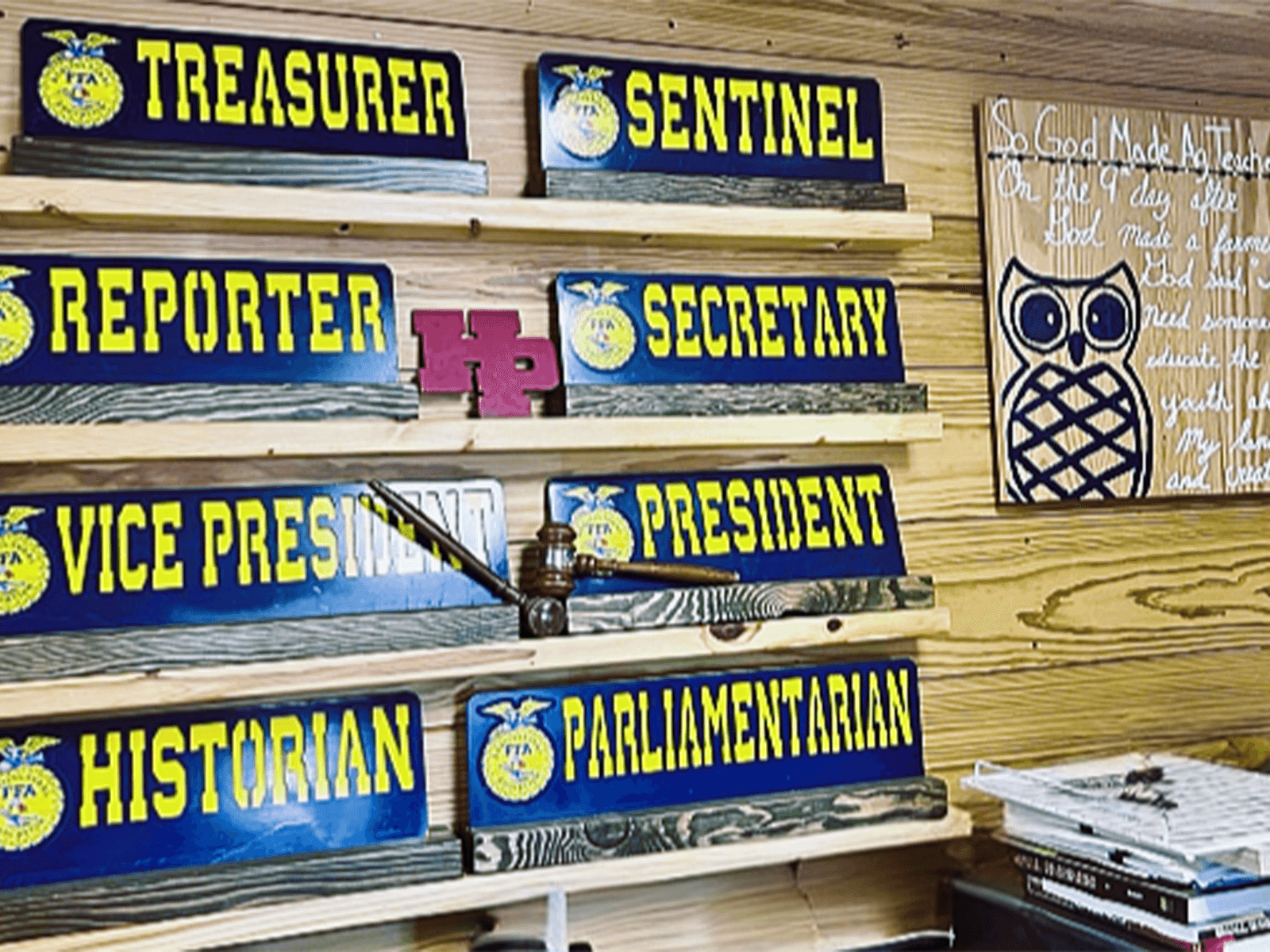
Despite its small size, High Plains boasts an impressive agricultural education program. With facilities including a greenhouse, storage shed, welding and woodworking shops, a kidding barn, an irrigation pivot, alfalfa plots, community gardens, and even a student-run goat herd, the program offers students an incredible range of hands-on learning opportunities. During her visit, Kubicek had the opportunity to shadow ag teacher Rebekah Kraeger and observe several class periods. It was clear that students were invested in their work.
“The students were engaged, and the atmosphere was one of collaboration and ownership,” Kubicek says. “They cared about their projects and about the program.”
One of the biggest realizations from her visit wasn’t just the impressive facilities and high levels of student engagement; it was also encouraging to see the extraordinary level of community support behind the High Plains ag program and FFA chapter. Kubicek recalls that nearly every major project or resource had been donated by local individuals or businesses—the pivot, the calf, the alfalfa field—all gifted by people who believe in the value of ag education.
“Community support and involvement is the biggest takeaway from my field experience,” Kubicek said, noting how inclusion and involvement begins early. “It’s exciting to see that level of buy-in. High Plains even buys a chapter shirt for every Pre-K through 6th grade student, every staff member, and multiple shirts for every sponsor.”
Kubicek came away with a long list of ideas to bring back to Aquinas. With plans underway to renovate the shop, seeing another program’s setup was both timely and informative.
“It was incredibly helpful to see a shop of similar size and how they make it work,” she said.
She also took note of how High Plains stores flammables, a simple but important detail for safety and functionality. Another exciting discovery for Kubicek was observing High Plains students using a laser engraver and metal plasma cutter, both tools that Kubicek’s students have considered for starting their own school-based enterprise. Even practical design ideas, such as the storage shed High Plains students built using old irrigation pipe, offered inspiration.
“Being able to learn from one of my peers, on their home turf, is priceless,” she says. “We all have different areas of strength and expertise, and these kinds of visits help us grow together.”
Reflecting on her experience, Kubicek expressed gratitude for the opportunity to learn from a colleague in the field. Thanks to the Nebraska FFA Foundation’s support and welcoming opportunity from High Plains, Kubicek began the school year with new ideas, stronger plans, and a deeper understanding of how creativity, collaboration, and community can transform an ag program.