
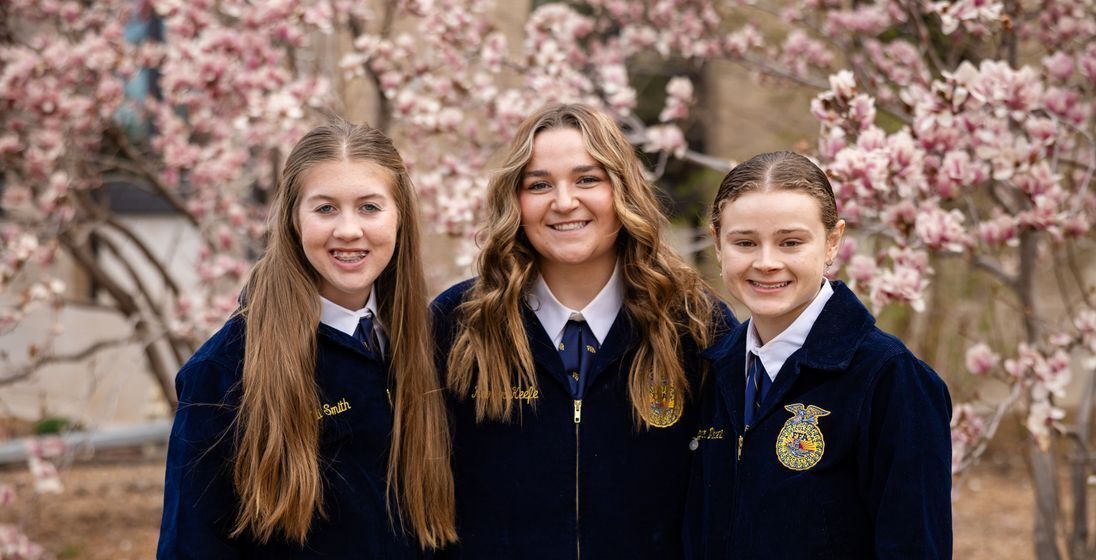
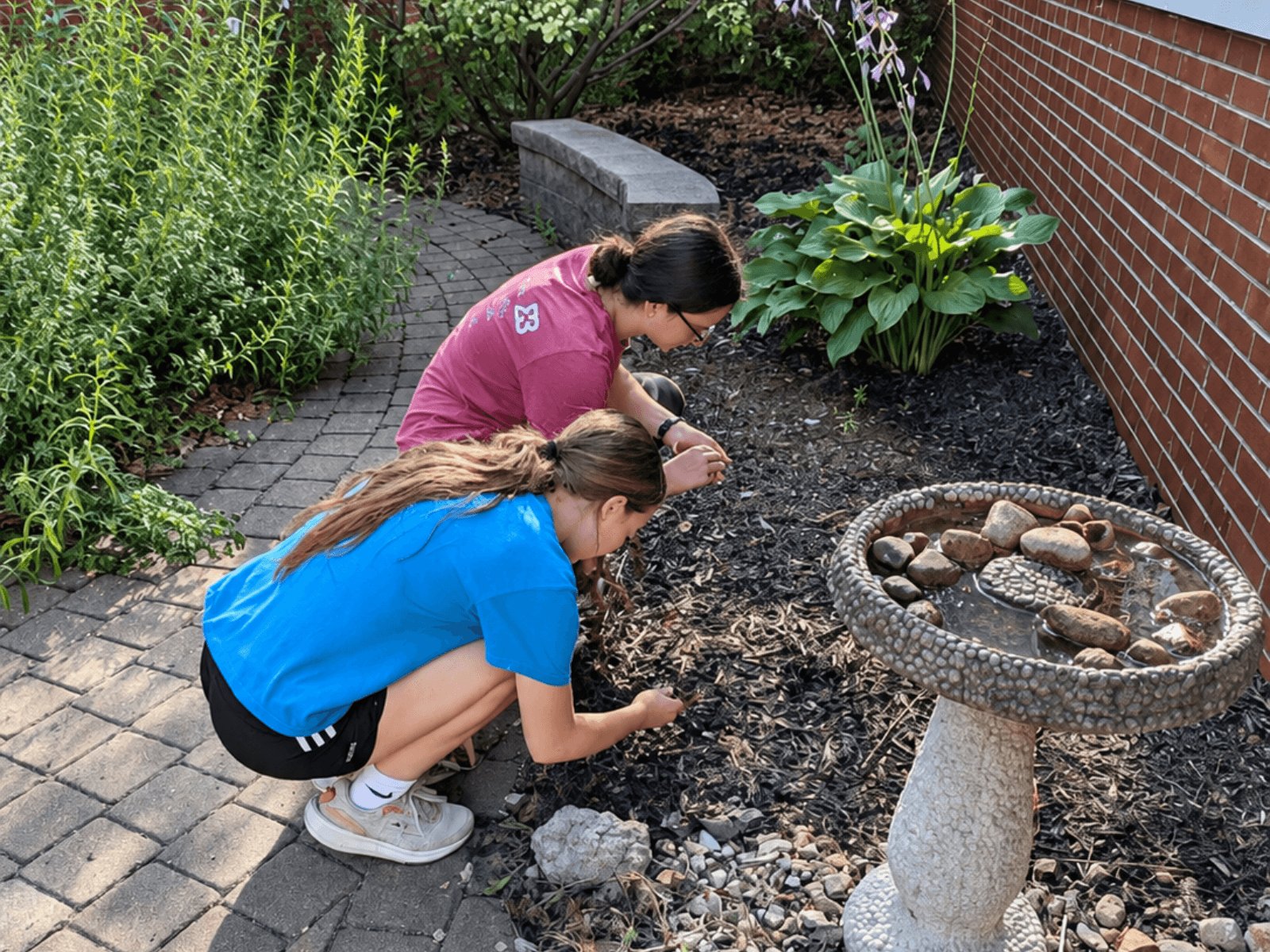
At Johnson-Brock, learning has been taken back to its roots, literally. FFA advisor and agricultural education teacher Ashton Bohling and her students have been working to transform the school’s outdoor space into an outdoor classroom. When an addition was built onto the school, it enclosed a courtyard area that had been primarily unused and was essentially a blank canvas. Bohling, along with her students, saw potential in the space and began converting it into a more usable area.
“We wanted to continue to transform an outdoor space where students could also learn about native plants, ecosystems, and the environment,” says Bohling.
The project was started a few years back with the FFA chapter’s initial “Living To Serve” grant and has continued to see improvements over the years. As their FFA chapter grew to more than 80 members, interest grew in the project. But so did supplies and costs.
To elevate the space, the agriculture program wanted to introduce a wider variety of plants to teach plant identification, boost biodiversity, improve aesthetics, and naturally control weeds. This would require a watering system that could be effectively managed by students, not only during the school year, but also throughout the summer months. In addition, they needed more tools, such as spades, shovels, pruners, trowels, garden carts, and drainage supplies to properly maintain the space.
Their ideas and wish list became a reality through the Nebraska FFA Foundation Local Chapter Grant Program with funding from Frontier Cooperative.
“We love to be able to take our students outdoors as much as possible, so we wanted to continue to work on this space to provide opportunities for our students but also for all classes,” Bohling explains.
Today, students can take a nursery landscape class in this space to learn about planting, pruning, and other soil and plant maintenance techniques. Later, the group added a chicken waterer and nesting boxes so they could bring the school chickens into the courtyard. They also purchased supplies and enlisted the metals fabrication class to design and construct a drain cover system to combat drainage issues in the courtyard.
The outdoor education space allowed students to collaborate on a hands-on project and see the result of their hard work. As the courtyard took shape, the project sparked involvement across the entire school and became something much bigger. Three other science teachers joined the effort to help make the space more usable for science experiments, ecosystems labs, and biodiversity instruction. But the interest and collaboration didn’t stop there.
“It was truly a collaborative effort for our students to start working on a class project, and then it ended with our football and volleyball teams helping with the installation after practice one day in the summer. Some of the coaches even came to assist,” Bohling says.
What started as an empty courtyard is now a vibrant learning hub for the entire school community. Whether a student is interested in agriculture, horticulture, construction, or even raising chickens, the space offers something new to discover.
Johnson-Brock FFA transformed and will continue to transform their outdoor education classroom. With every shovel, pruning tool, or trowel, students are continually learning, all while leaving a lasting legacy for their school.